Monday morning, 8:30. Your inbox holds the Lighthouse report, an email from Search Console, an export from the accessibility check and a message from a customer saying the cart freezes on mobile. Four sources, four formats, four priorities. Which one is costing you revenue right now?
No single tool answers that question. That is why we built Overhub: a platform that brings all quality data of your shop into one feed and turns it into a list you can actually work through.
Overhub: One feed instead of ten tools
Fachbeitrag–E-Commerce–
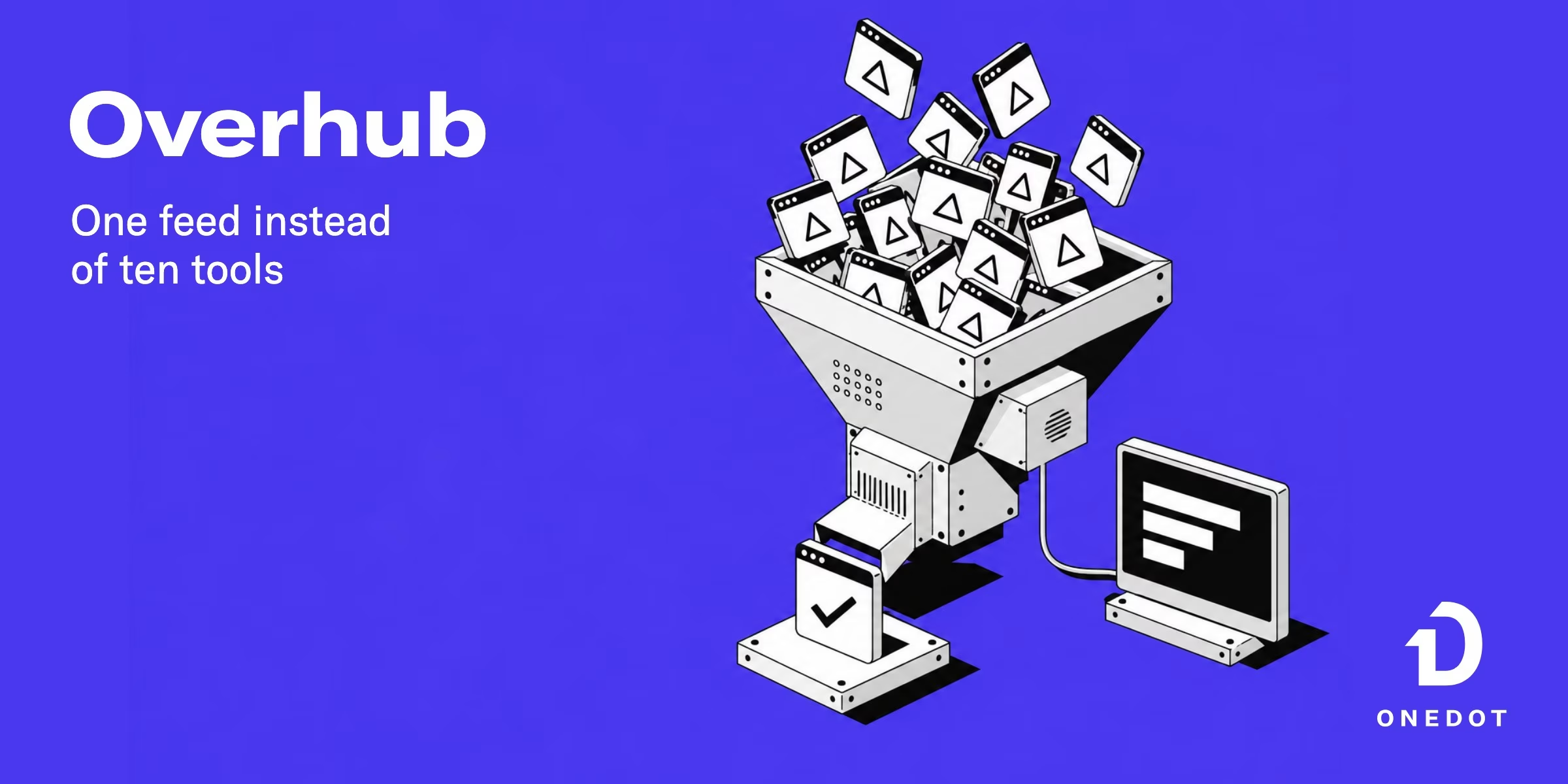
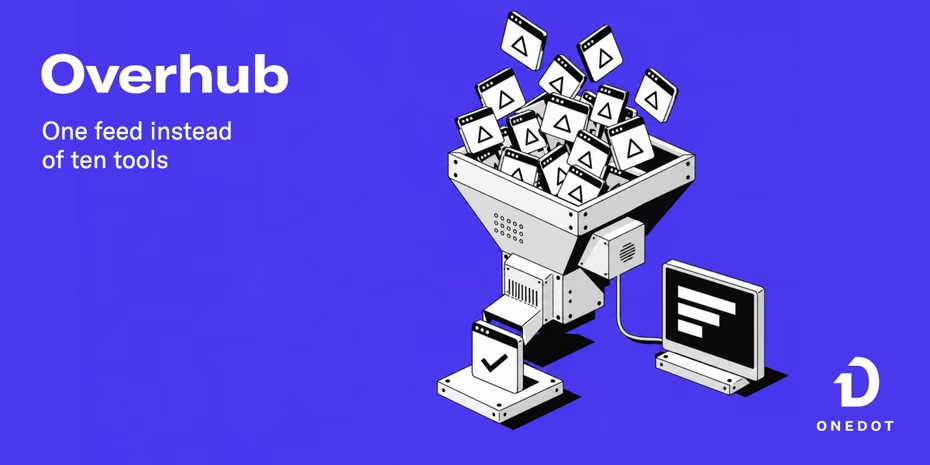
Lighthouse, Search Console, accessibility checks, checkout tests: every tool delivers its own list. Overhub brings everything into one feed, grouped by root cause and sorted by what needs doing first.
Key takeaways
One feed instead of ten tools: Overhub combines SEO, performance, accessibility, security, checkout tests and shop data.
Grouped by root cause: One error on 214 pages is one task, not 214.
A ranking you can verify: Severity, category, effort and number of hits decide. Every factor is visible.
Confirmed, not claimed: A finding counts as done only when the next scan confirms it.
Built for people and agents: Your team reads the feed in the dashboard, coding agents pick up tasks via MCP.
Ten tools, ten truths
A grown Shopware or Shopify shop is checked from many sides today. Lighthouse measures Core Web Vitals, Search Console reports indexing issues, a crawler finds broken links and duplicate titles, an accessibility check counts missing labels. Add uptime, TLS certificates, security headers, cookie banners and tracking.
Each of these tools is right. The problem is that each is only right on its own. Results arrive as CSV exports or emails, in their own schemas and with their own weighting. What comes first is decided by someone by hand. Translating findings into actions is the most expensive part of quality assurance, and most teams do it again every week.
One error on 214 pages is one task
A missing alt attribute in the product template shows up on every product page in a crawl. A classic report then lists 214 findings. In reality there is exactly one cause and exactly one fix.
That is why Overhub groups findings across all URLs. Same cause, one group. If a second scanner reports the same problem, Overhub merges both reports instead of listing them twice. A list with hundreds of rows becomes a handful of tasks, each with a clear place in the code or the CMS.
A ranking you can verify
Findings are sorted by four factors: severity, category, effort and the number of affected pages. A broken checkout ranks above a meta title that is too long, even if the title appears on more pages.
We deliberately skip a euro score that claims to calculate exact revenue loss. Such numbers look precise but are hard to back up. Instead, every factor of the ranking is visible and verifiable. A language model can phrase titles, reasoning and actions more clearly. The order itself is decided by a fixed rule table, not by AI.
Want to know what is slowing your shop down?
What Overhub checks
Our own scanners plus the data sources you already use. And revenue from Shopify, Shopware and GA4 in the same feed.
Visibility
Function and speed
Security and operations
Fixed is what the scan confirms
Setting a ticket to “done” is easy. Whether the error is really gone only shows in the next run. Overhub keeps these two things strictly apart: reporting a fix triggers a targeted re-check. A group is closed only when the scan no longer finds it.
If a fixed error comes back, for example after a plugin update or a deploy, Overhub reopens the group. So you see not only what is open, but also what demonstrably works. Progress you can prove instead of claim.
Built for people and agents
The feed is written for people: clear titles, a reason, a concrete action. At the same time, Overhub connects directly to Claude and ChatGPT via MCP. A developer or their coding agent picks up the next task, reads the project context with brand, goals and exclusion rules, reports the fix and triggers the re-check.
The line is clearly drawn: an agent may report fixes and justify false positives. Only the scan sets a group to “fixed”. That keeps the status reliable, whether a person or an AI worked on the code.
Who Overhub is for today
Overhub is a product by ONEDOT. We use it for the shops we look after, mainly on Shopware and Shopify. For external shops, Overhub is now starting in early access: the first shops get access and a personal onboarding session. You can join the waitlist at overhub.io.
Our honest recommendation: Overhub does not replace UX testing or a shop system. It is the layer underneath that keeps technical quality visible over time. Your own team can fix what it finds, or we take care of it as your e-commerce agency.
Conclusion
More tools do not make a shop better. A clear order does. Overhub groups what belongs together, sorts by what matters first and closes tasks only when the scan confirms it. Knowing every morning what is slowing your shop down: that is the point.
Frequently asked questions about Overhub
Overhub is a platform by ONEDOT that combines quality, SEO, analytics and shop data in one feed. Findings are grouped by root cause and put into a verifiable ranking, for people in the dashboard and for AI agents via MCP.
The focus is on Shopify and Shopware shops. Platform status and data also come from Storyblok, Vercel, GitHub and Maxcluster.
No. Overhub uses these sources and brings their results together. The value lies in grouping, ranking and confirmed re-checks, not in yet another standalone report.
Only when the next scan no longer finds it. A reported fix triggers a targeted re-check. If the error reappears later, Overhub reopens the group.
Overhub is in early access. You can join the waitlist at overhub.io. Shops looked after by ONEDOT already benefit from it.
No-obligation enquiry
We will get back to you within 24 hours.
Project type
Details
Contact info
What is your project about?
Multiple selections possible
Insights that keep us involved and inspired.
View all insights